
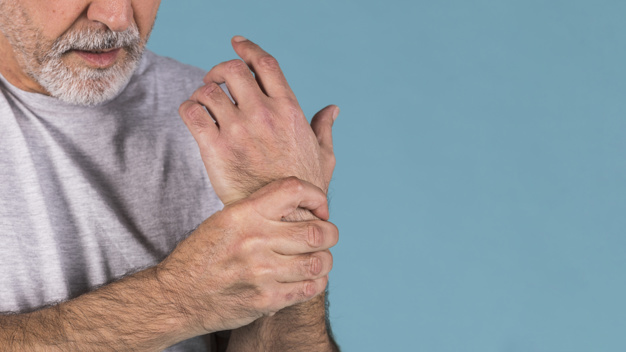
Rheumatoid arthritis (causes, symptoms, treatment)
Rheumatoid arthritis
Introduction
Rheumatoid arthritis is an autoimmune disease in which inflammation of the joints occurs, due to the immune system mistakenly attacking healthy cells in the body, and can damage body organs, including the skin, eyes, lungs, heart, and blood vessels. It is a long-term condition that causes pain, swelling, and stiffness in the joints, and arthritis can start at any age and the likelihood of developing it increases with age.
Rheumatoid arthritis often occurs in small joints at first, and as the disease progresses, symptoms often spread to the wrist, knee, ankle, elbow, hip, thigh, and shoulder joints, although in most cases, symptoms occur in the same joints on both sides of the body.
Symptoms of Rheumatoid arthritis
The main symptoms of rheumatoid arthritis are joint pain, swelling, and stiffness, and symptoms often occur during periods of disease activity interspersed with periods of remission
- Joint stiffness for 30 minutes or more
- fatigue
- Fever
- Loss of appetite
- Increased inflammation
- Dry eyes and mouth
- visual impairment
- Vasculitis
 Risk factors for rheumatoid arthritis
- Family history.
- Gender: Women are 2 to 3 times more likely than men to develop rheumatoid arthritis.
- Age: Rheumatoid arthritis is more common in early to middle age.
- Smoking and obesity increase a person’s risk of developing the disease.
Diagnosis of the disease
Diagnosing rheumatoid arthritis within 6 months of the onset of symptoms is important to maximize the chances of treatment and slow the progression of the disease.
Diagnosis and effective treatments can help minimize the harmful effects of rheumatoid arthritis, which can be diagnosed by following these steps by a medical professional:
- Review of symptoms
- Performing a physical examination
- X-ray procedure
- Performing lab tests
How to treat
Although there is no cure for rheumatoid arthritis, early treatment and support (including medications, lifestyle changes, supportive therapies, and surgery) can reduce the risk of joint damage, relieve symptoms, improve physical function, and minimize long-term complications.
Exercise and its positive role in the lives of rheumatoid arthritis patients
People with rheumatoid arthritis need to make lifestyle changes based on the amount of pain and stiffness they experience, as well as adapting the way they perform simple daily tasks that can become difficult or take longer to complete.
A person with rheumatoid arthritis can exercise regularly to relieve stress, as well as help maintain joint mobility and strengthen the muscles that support the joints, in addition to its role in maintaining a healthy weight, especially since excess weight puts extra strain on the joints, for example walking, swimming or cycling for 30 minutes a day, five days a week.
However, it is important to balance rest and physical activity, so consult your doctor about your body’s ability to engage in sports and physical activity, as rest is essential for inflamed joints, but immobility and inactivity will lead to stiffness in these joints and muscle weakness.
A doctor can guide a person with arthritis on which physical activities are most effective in reducing the pain and disability associated with arthritis.
Since arthritis is a long-term condition, it can take a toll on the patient psychologically, leading to feelings of depression, stress, and anxiety at times, perhaps because these feelings are associated with pain and fatigue.
Therefore, the patient should maintain his fitness and physical health and follow the doctor’s instructions regarding ways to maintain his fitness and mobility and minimize pain episodes in the long run.
Sources:
1. NHS Choices, Rheumatoid arthritis (RA), 12/08/2016, [electronic version] available at:
https://bit.ly/2DMu91M
2. Centers for Disease Control and Prevention, Rheumatoid Arthritis (RA), 12/08/2016, [electronic version] available at:
https://bit.ly/2Ly7uX1
3. Saudi Ministry of Health, Rheumatoid Arthritis, 14/Jumada II/1439, [electronic version] Available at:
https://bit.ly/2gpQxB3